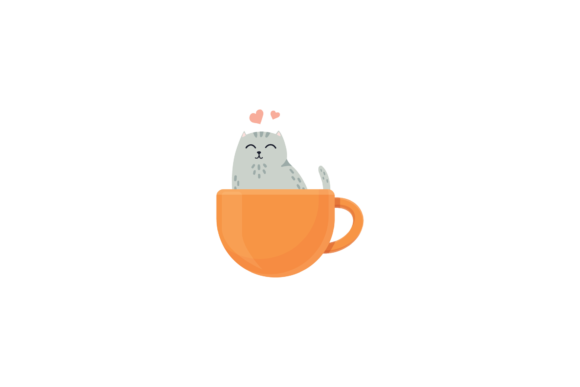
Cat Soaking in a Big Cup of Tea SVG
A Warm, Whimsical Fit—But Only Where It Belongs
First impression? This isn’t just another cat graphic—it’s a quiet moment of cozy anthropomorphism. The Cat Soaking in a Big Cup of Tea SVG presents a relaxed feline curled inside an oversized teacup, steam curling upward like a gentle sigh. There’s no frantic energy, no forced cuteness—just soft curves, balanced negative space, and a visual rhythm that feels handmade, not algorithmically generated. As someone who’s digitized hundreds of icons for embroidery clients, I immediately saw its potential: a boutique apron for a local tea shop, a linen pillow cover for a nursery, or a small embroidered patch on a denim jacket. But—and this matters—I also saw where it would stumble.
Where It Shines: Real Projects That Feel Thoughtful
I tested the Cat Soaking in a Big Cup of Tea SVG as a machine embroidery design on a medium-weight cotton tote bag—no lining, no heavy interfacing. At 3.5 inches wide, the cup held clean satin stitch edges, the cat’s ear and paw details resolved without thread nesting, and the steam swirl read clearly in a light gray thread on natural canvas. Customers paused at the booth to smile, then ask, “Is that *real* tea?” That kind of quiet engagement is gold for Etsy sellers and craft fair vendors. It also worked beautifully as a sweatshirt embroidery piece (centered above the left pocket), especially when paired with a subtle fill stitch background in tone-on-tone ecru thread. On baby onesies? Yes—but only up to 6 months. The scale holds; the theme reads as gentle, not cutesy-overload.
As a digital embroidery file, it’s versatile across categories: Icons for branding (think minimalist logo embroidery on tea towels), Graphics for printable mockups used by digital product sellers, and even as a starting point for an applique design if you add fabric layers manually. Its clean silhouette makes it ideal for holiday embroidery—imagine it stitched onto a wool blend blanket as a gift for a bookish friend—or as part of a curated set of nursery decor pieces.
Where to Pause Before Stitching
This design breathes best on stable, smooth fabrics. On stretchy knits (like lightweight jersey for toddler tees), the cup’s rounded base can distort unless you use cutaway stabilizer and reduce stitch density slightly. On textured fabrics—burlap, terry cloth, or heavily brushed fleece—the fine steam line and delicate whisker hints vanish under pile. And avoid placing it on curved surfaces like cap fronts without testing hoop placement first; the cup’s width stretches awkwardly over the crown unless resized to ≤2.75 inches.
It’s not built for tiny hoops. Below 3 inches, the cat’s eye detail blurs into a blob, and the steam loses definition—critical if you’re making embroidered patches for enamel pin collabs or mini keychains. Also, skip dark fabric unless you’re willing to add underlay or switch to a high-contrast thread palette. The current outline relies on shape clarity, not bold contrast—and that means it needs breathing room, not visual competition.
Design Notes Every Embroidery Designer Should Check
- Test on scrap fabric first—especially if using it for custom apparel or baby embroidery, where fit and feel matter more than aesthetics alone.
- Review stitch density before scaling down. Dense fill areas in the cup’s interior can cause puckering on lightweight cottons.
- Confirm hoop size compatibility. At full resolution, this works cleanly in 4x4 and larger hoops—but don’t assume it’ll auto-fit a 3x3 without manual adjustment.
- Inspect small details in your embroidery software: the steam curl, the cat’s tail tip, and the cup’s handle curve all need clear pathing to avoid jump stitches or thread breaks.
- Try black-and-white mockups before finalizing thread colors. This design gains warmth from tonal variation—not saturation—so grayscale previews reveal whether contrast holds.
- Use proper stabilizer: medium tear-away for stable wovens, cutaway for knits or lightweight linens.
- Verify licensing before selling finished products or bundling the Cat Soaking in a Big Cup of Tea SVG as part of a commercial embroidery collection. Not all SVGs include commercial-use rights—even if labeled “Graphics” or “Icons.”
How It Shapes Your Handmade Product’s Personality
Used well, this design elevates perceived value. A customer buying a personalized gift—a monogrammed tea towel with the Cat Soaking in a Big Cup of Tea SVG stitched subtly in one corner—doesn’t just get utility. They get narrative. That story builds trust: it signals care in selection, attention to mood, and alignment with their identity (“I’m the kind of person who appreciates slow mornings”). For small shop owners, that translates to repeat buyers and organic word-of-mouth. For Etsy sellers, it improves listing relevance—not because of keyword stuffing, but because real people search for “cozy cat embroidery,” “tea lover gift,” or “nursery pillow design” and recognize authenticity when they see it.
It also reinforces brand consistency—if your shop centers around calm, intentional living, this design fits seamlessly alongside botanical motifs or handwritten typography. But force it onto a rugged outdoor gear line or a neon-lit streetwear collection, and it reads as dissonant, not charming.
A Final Thought Before You Digitize
The Cat Soaking in a Big Cup of Tea SVG isn’t a “plug-and-stitch” solution. It’s a mood, a pause, a small act of visual empathy. It rewards thoughtful placement, respectful scaling, and honest material choices. Use it to soften a kitchen towel’s utility, warm up a baby gift’s sentiment, or add quiet charm to a boutique’s merch lineup—and it’ll earn its place in your embroidery project rotation. Skip the rush, honor the details, and let the cup hold its warmth, not just its cat.